
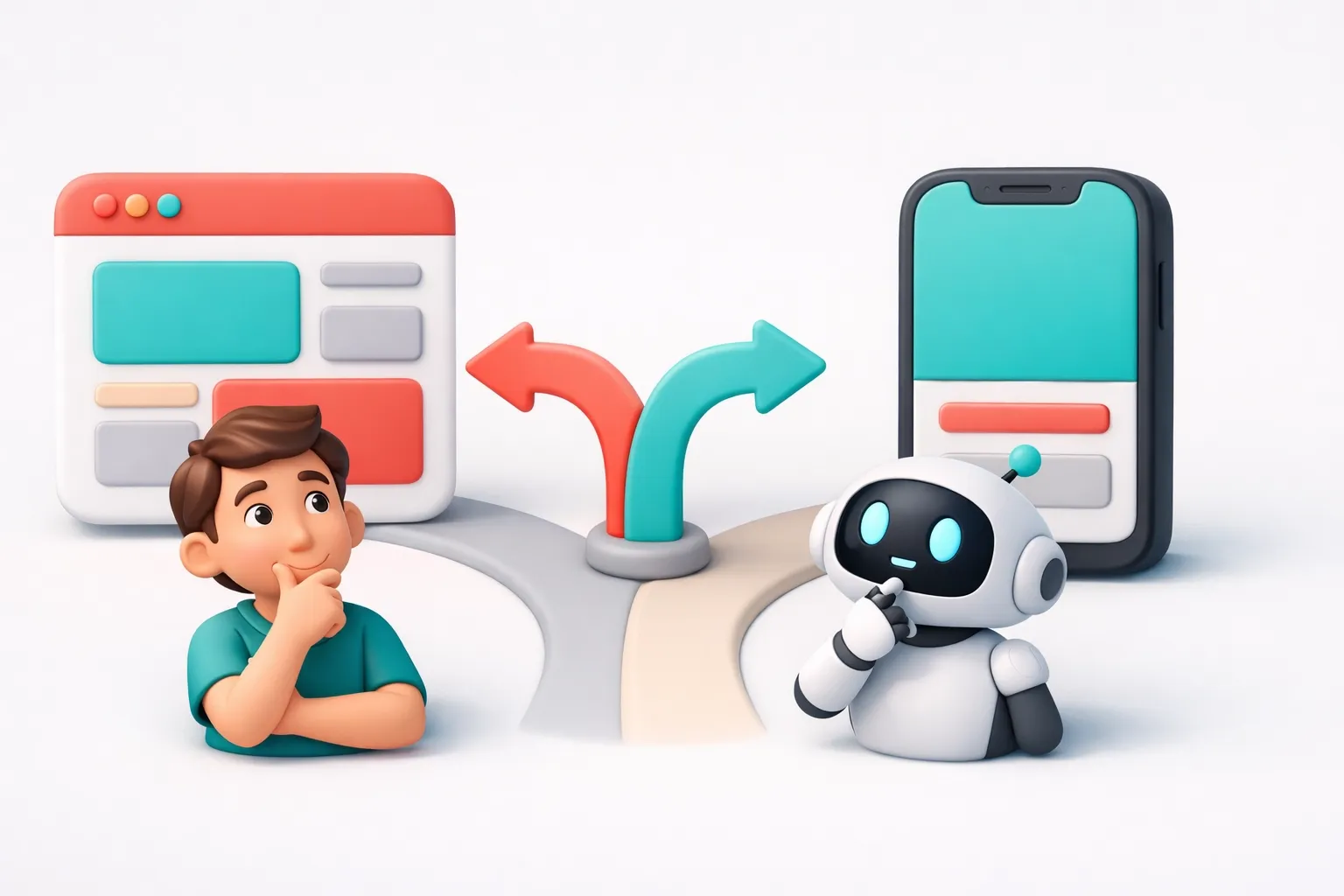
Choosing between a web app and a mobile app is often the first "make or break" decision a founder or CTO faces. It’s not just a technical choice; it’s a strategic one that dictates your burn rate, your time-to-market, and how you’ll eventually scale.
At Netling Digital, we’ve guided dozens of startups and enterprises through this crossroads. The answer isn't a simple "this one is better." It’s about alignment with your business goals. Should you prioritize the universal reach of the browser or the high-performance "home screen" real estate of a smartphone?
In this guide, we’ll break down the pros, cons, and costs of both paths to help you decide which to build first.
---
The TL;DR: Quick Decision Matrix
If you are looking for a quick answer, here is the general rule of thumb we use at our engineering studio:
- Build a Web App first if: You need to validate an MVP quickly, have a limited budget, or rely heavily on SEO and search discoverability.
- Build a Mobile App first if: Your core value proposition requires offline access, high-frequency usage (like a habit-tracker), or deep integration with phone hardware (GPS, Camera, Bluetooth).
---
Understanding the Web App Advantage
When we talk about web app development services, we aren't talking about simple websites. Modern web apps (or SaaS platforms) are complex, interactive tools that run in a browser. Think Slack, Trello, or Canva.
1. Speed to Market
Web apps are generally faster to deploy. Because there is no "App Store Review" process, you can ship code the moment it’s ready. For founders in the "discovery" phase, this speed is a competitive advantage. You can push a feature in the morning, watch user behavior in the afternoon, and iterate by the evening.
2. Universal Reach with a Single Codebase
A web app works on Windows, macOS, Linux, iOS, and Android, all from one codebase. You don’t need to hire separate Swift and Kotlin engineers. This consolidation significantly lowers the barrier to entry and simplifies your initial engineering craft.
3. SEO and Discoverability
Mobile apps are "walled gardens." They are hard to find unless a user is specifically searching the App Store. Web apps, however, live on the open internet. Using modern SEO strategies, your platform can capture "top of funnel" traffic from Google, which is crucial for B2B tools and marketplaces.
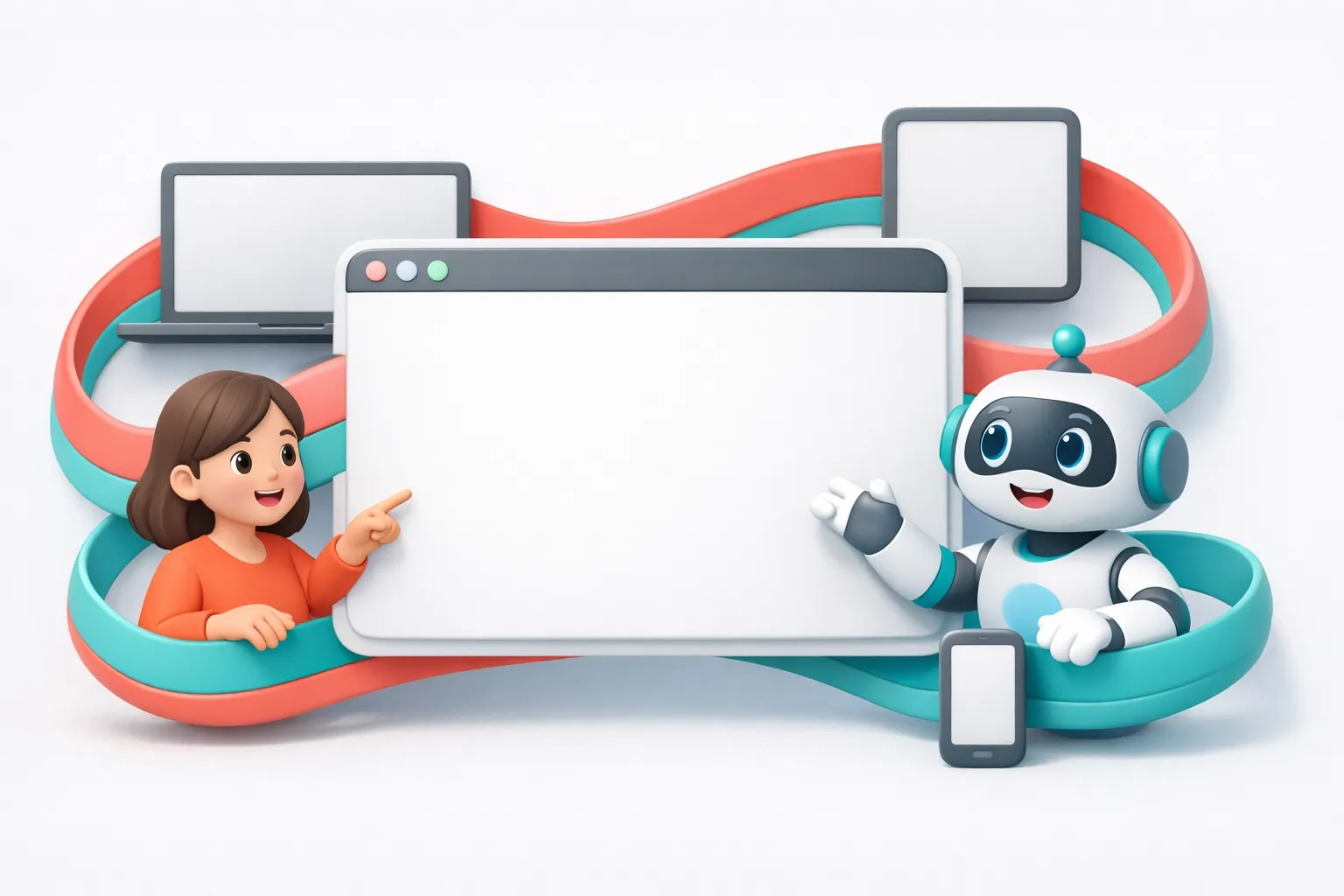
Visual: Premium 3D claymorphism scene: human + robot/AI (proper, readable faces) interact with a large abstract browser frame that expands/morphs into multiple device outlines (laptop/tablet/phone) to represent universal reach. Brand Coral (#FF5A4D) and Teal (#3BC9B0) on #F8FAFC. No text, no logos, no mascots.
---
The Case for Going Mobile-First
While web apps win on reach, mobile apps win on engagement. If your product is something a user needs to check 20 times a day, the friction of opening a browser might be too high.
1. Performance and "Snappiness"
Native mobile apps (built specifically for iOS or Android) are faster than web apps because they interact directly with the device's processor. For high-utility tools, gaming, or complex data processing, the performance gap is noticeable.
2. Device Integration
Does your app need to track a user’s heart rate? Does it need to scan barcodes in a dark warehouse? While web browsers are getting better at accessing hardware, native mobile apps still have superior access to the camera, GPS, accelerometer, and biometrics (FaceID/TouchID).
3. Push Notifications and Retention
Nothing drives retention quite like a well-timed push notification. While web push exists, it is notoriously unreliable on iOS. If your business model depends on "nudging" users back into the app, a mobile presence is almost mandatory.
---
Cost Comparison: Web vs. Mobile
Budget is often the ultimate decider. Let’s look at how the numbers typically break down for a professional build.
When you utilize professional web app development services, the initial investment for a robust web platform is typically 30-50% less than building native apps for both iOS and Android.
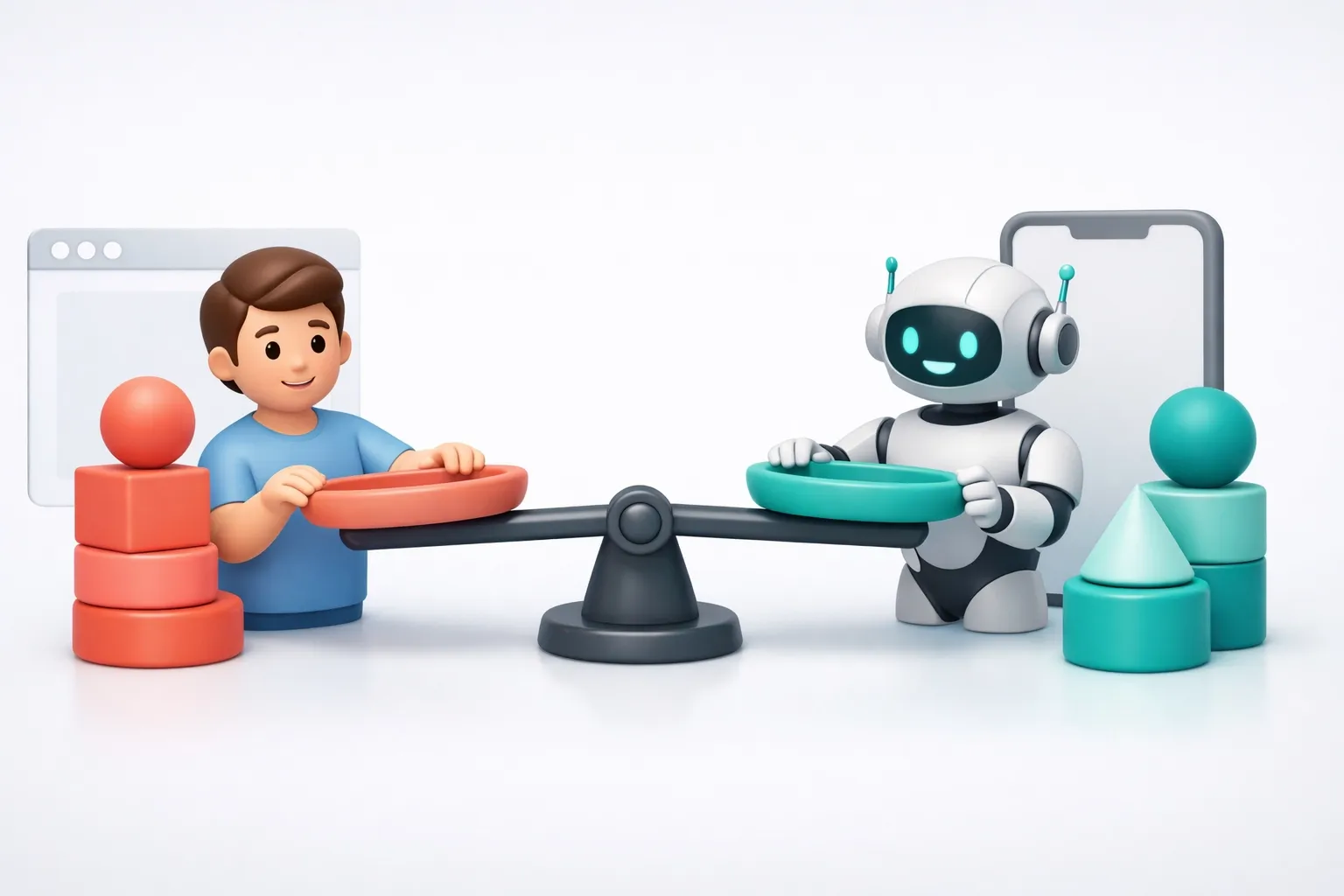
Visual: Premium 3D claymorphism balance-beam metaphor: human + robot/AI (proper, expressive faces) weigh geometric stacks and abstract browser-window vs smartphone slabs to signal web vs mobile cost trade-offs. Brand Coral (#FF5A4D) and Teal (#3BC9B0) on #F8FAFC. No text, no logos, no mascots.
---
The "Hybrid" Middle Ground: PWAs
What if you want the reach of the web but the feel of a mobile app? Enter the Progressive Web App (PWA).
A PWA is essentially a web app that can be "installed" on a user’s home screen. It offers offline capabilities and a full-screen experience without the address bar. For many of our clients at Netling Digital, a PWA is the perfect "Version 1.5." It allows you to test mobile behavior without the $50k+ overhead of native development.
Read more about modern development shifts in our post on why traditional web development is evolving.
---
Strategy: Which Should You Choose?
To make this decision easier, we suggest evaluating your project against these four pillars:
Pillar 1: Frequency of Use
If your app is a "utility" (like a calculator or a social network) that users open multiple times a day, go Mobile. If it’s a "task" app (like a tax filing tool or a booking system) used once a month, go Web.
Pillar 2: Feature Complexity
Does your app require complex gestures or high-speed animations? Native mobile is your best bet. Does it require a lot of data entry and keyboard usage? A web app is significantly more user-friendly for typing and complex workflows.
Pillar 3: Monetization
If you plan to charge for your app, remember the "Apple Tax." Apple and Google take a 15-30% cut of in-app purchases. With a web app, you can use payment processors like Stripe and keep 97% of your revenue.
Pillar 4: The Iteration Cycle
Are you still figuring out your product-market fit? If so, the friction of the App Store will kill your momentum. We almost always recommend starting with web app development services for early-stage startups so they can pivot without re-submitting to the stores.
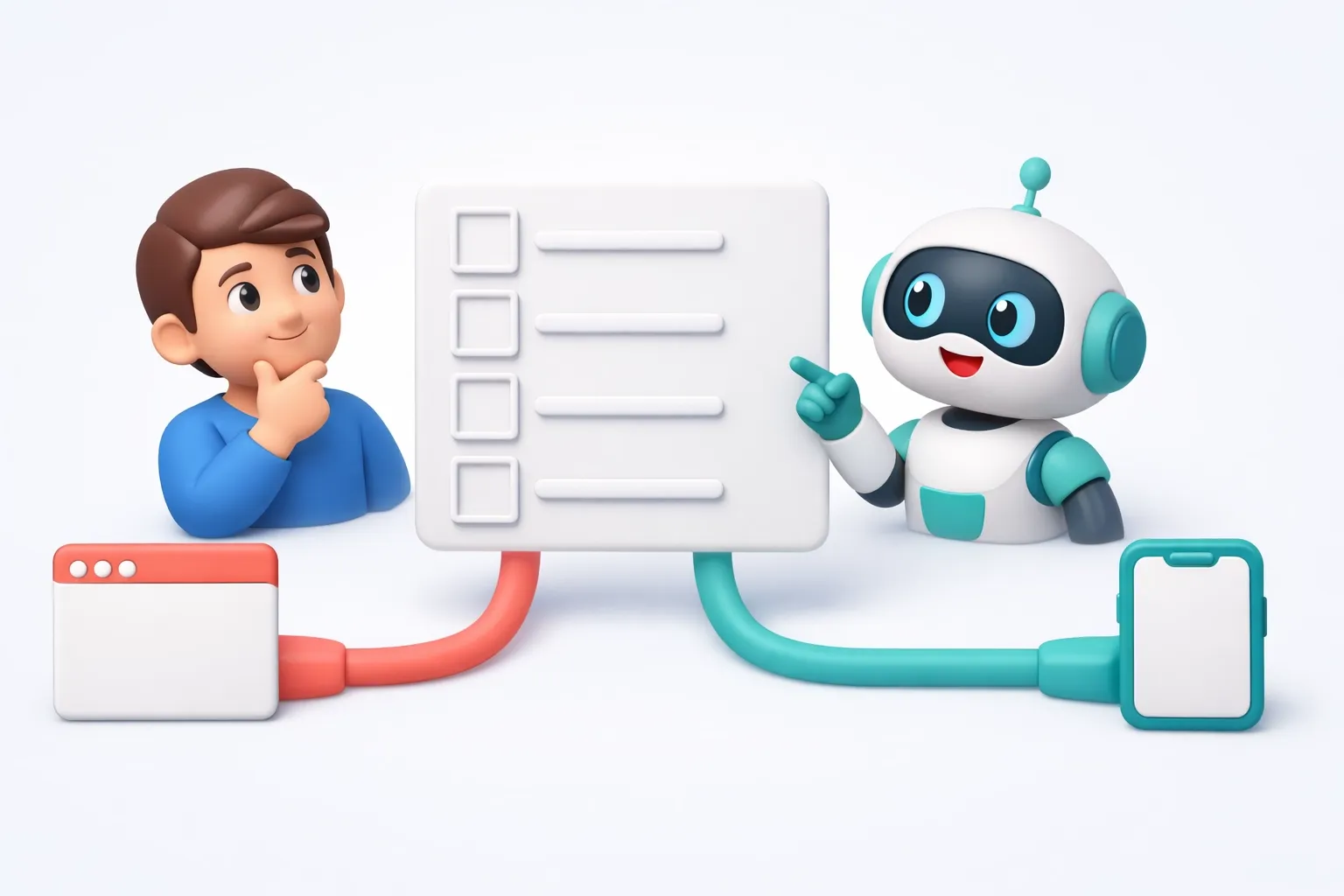
Visual: Premium 3D claymorphism scene: human + robot/AI (proper, readable faces) engage with a floating blank checklist board; two clean branching paths extend to an abstract browser frame icon and an abstract smartphone icon (no text) to represent choosing web vs mobile. Brand Coral (#FF5A4D) and Teal (#3BC9B0) on #F8FAFC. No text, no logos, no mascots.
---
The Netling Approach: Building for Scalability
At Netling Digital, we don't just build apps; we engineer systems. Whether you choose web or mobile first, our philosophy centers on Clean Architecture.
When we build a web app for a client, we ensure the backend (the API) is decoupled from the frontend. This means when the time comes to build your mobile app, 70% of the work is already done. Your mobile app will simply "plug in" to the existing infrastructure we’ve already built and tested.
This approach prevents the "Legacy Debt" that often kills growing companies. You can read more about how we handle legacy system modernization to see how we future-proof our builds.
---
Why "Web-First" is the Modern Standard for MVPs
In 2026, the browser is more powerful than ever. With WebGL, WebAssembly, and advanced APIs, the "gap" between web and mobile is shrinking every day.
By starting with a web app, you get:
- Immediate Feedback: Send a link to anyone, anywhere.
- Lower Burn Rate: Spend your capital on refining the product, not on platform-specific bugs.
- SEO Foundation: Build your brand's search authority from Day 1.
Once you have 1,000+ active users begging for a mobile app, that’s when you build it. At that point, you aren't guessing, you’re responding to demand.
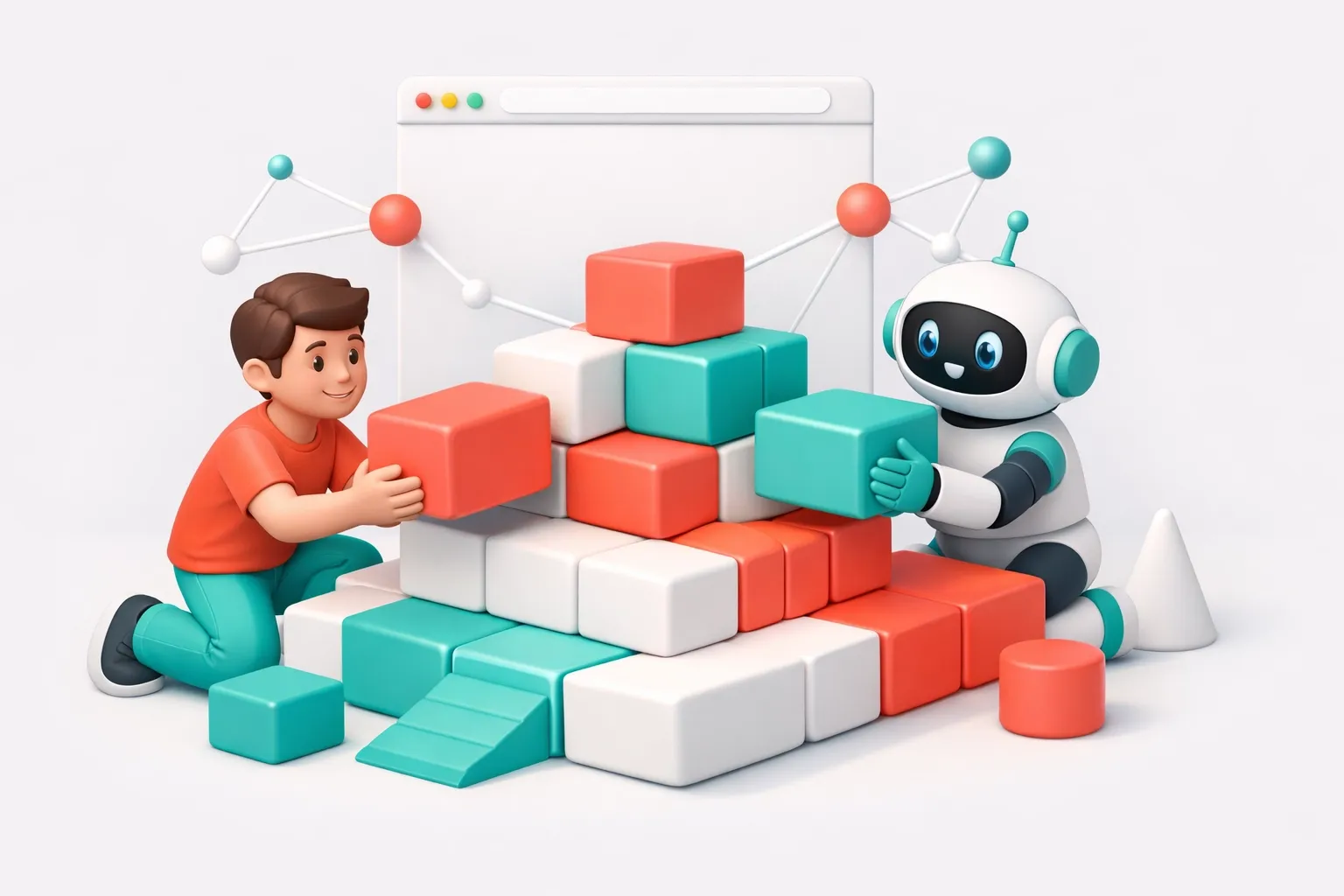
Visual: Premium 3D claymorphism scene: human + robot/AI (proper, expressive faces) assemble a sturdy foundation/launchpad structure from interlocking geometric blocks to imply a strong web-first starting point for scaling. Brand Coral (#FF5A4D) and Teal (#3BC9B0) on #F8FAFC. No text, no logos, no mascots.
---
Conclusion: Start Smart, Scale Fast
The "Web vs. Mobile" debate isn't about which technology is superior; it's about which tool is right for your current stage of growth. For most founders, the web offers the lowest risk and the highest potential for rapid iteration.
If you’re ready to turn your vision into a functional, scalable product, our team at Netling Digital is here to help. We specialize in high-craft web app development services that serve as the foundation for multi-million dollar platforms.
Ready to build? Contact our engineering team today to discuss your roadmap and find out which platform will get you to market fastest.
More Articles
Continue reading from our engineering blog.
Complete Guide to MVP Development for Startups 2026
Building an MVP in 2026 isn't just about cutting features; it's about leveraging AI-native workflows and high-level engineering craft to ship products that validate and scale.

From Chaos to Clarity: A Masterclass in Requirement Elicitation for Complex Custom Software
Most software projects don't fail because of bad code; they fail because of misunderstood requirements. This masterclass breaks down the framework for turning chaotic visions into precise technical blueprints.

How to Choose a Custom Software Development Company in 2026: The AI-Native Guide
In 2026, the traditional outsourcing model is dead. To stay competitive, you need a custom software development company that leverages AI-native workflows and high-level engineering craft. Here’s your 2000-word masterclass on choosing the right partner.